
How to Preserve Homemade Lotion for a Longer Shelf Life

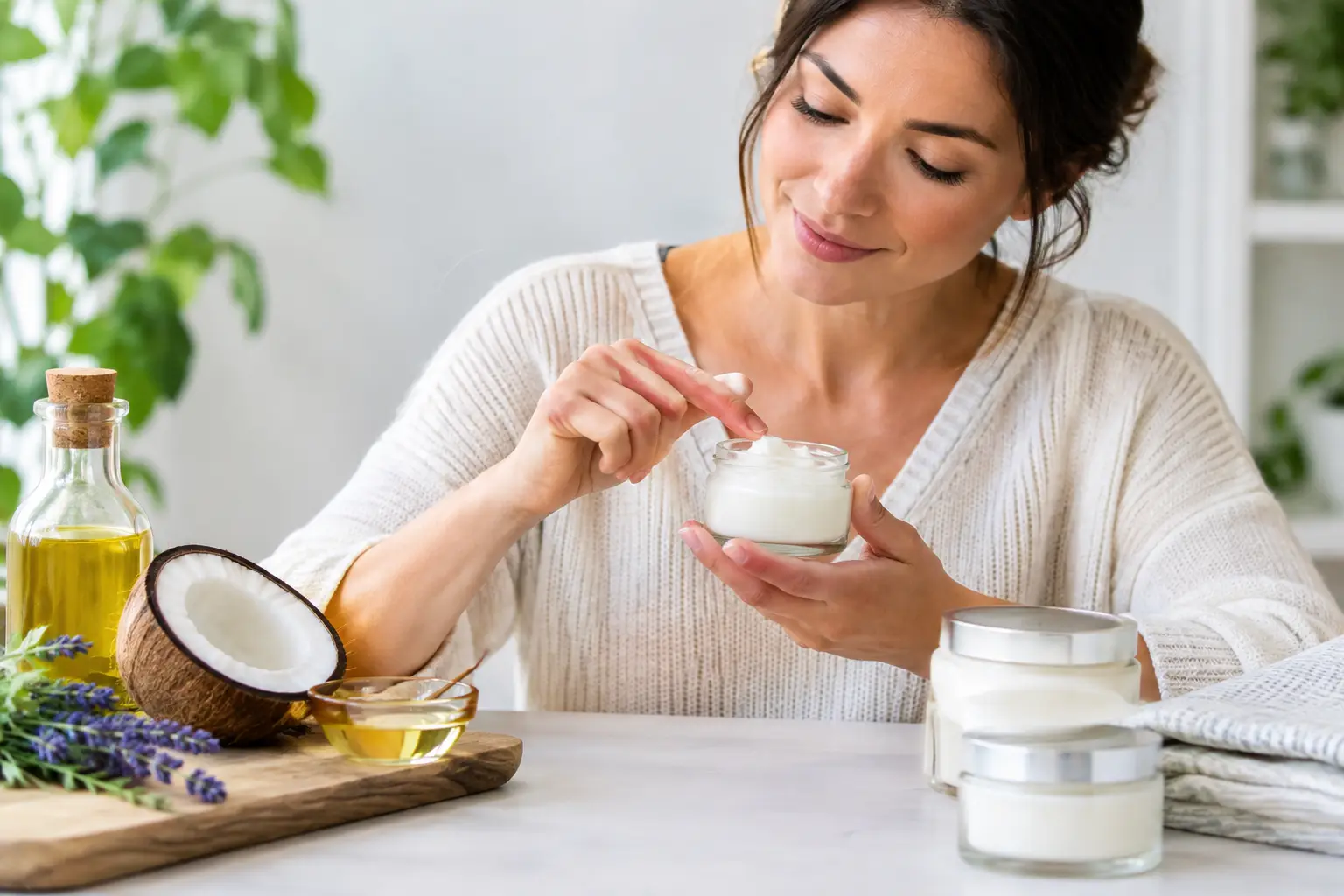
A beautiful homemade lotion can look and smell perfect while microbes are quietly growing inside it. That is why learning how to preserve homemade lotion is not an optional finishing touch. Any formula containing water, hydrosols, aloe juice, botanical teas, or water-based extracts needs a preservation plan from the very first draft of the recipe.
A preservative does not make a lotion sterile, and it cannot rescue a batch made with poor sanitation. What it does is help control bacteria, yeast, and mold introduced during making and everyday use. With the right preservative, compatible pH, clean process, and smart packaging, you can create a lotion that is safer, more reliable, and ready to enjoy or test as part of a small product line.
Why homemade lotion needs a preservative
Lotion is usually an emulsion: tiny droplets of oil are held in water with an emulsifier. That water phase makes the formula wonderfully hydrating, but it also creates an environment where microorganisms can grow. Oils and butters alone do not have the same preservation needs, but once water enters the formula, preservation becomes essential.
The biggest misconception is that visible mold is the only warning sign. It is not. Bacteria and yeast may be present long before a lotion changes color, separates, or develops an off odor. A batch can look fresh and still be unsafe to use.
Ingredients often mistaken for preservatives include vitamin E, rosemary antioxidant, essential oils, grapefruit seed extract, and refrigeration. Vitamin E and rosemary antioxidant help slow oxidation in oils, which can reduce rancidity. They do not provide dependable broad-spectrum microbial protection. Essential oils may contribute fragrance and offer limited antimicrobial activity in some settings, but they are not a tested preservation system for a water-based lotion.
How to preserve homemade lotion with a complete system
Preservation works best when you treat it as a system, not a single ingredient. Your formula, equipment, process, pH, and package all affect the finished product’s shelf life.
Start with a broad-spectrum cosmetic preservative
Choose a preservative designed for leave-on cosmetic products and effective against bacteria, yeast, and mold. This is what “broad-spectrum” means. Select one that works in emulsions, matches your intended pH range, and is compatible with your ingredients and processing temperature.
Every preservative has its own rules. Some are added during the heated water phase; many work best in the cool-down phase. Some need a formula below a specific pH. Others may have limitations with certain surfactants, proteins, or botanical materials. Follow the supplier’s recommended use rate and procedure exactly. More preservative is not automatically better, and under-dosing can leave the batch vulnerable.
Natural-origin and eco-conscious preservative systems are available, but “natural” does not mean foolproof. These systems can be especially dependent on correct pH, recommended use level, and good manufacturing practice. Choose based on performance in your formula, not marketing language alone.
Measure pH instead of guessing
pH is one of the most practical checks a lotion maker can perform. Many preservative systems only work within a narrow pH range, and skin-friendly lotions are commonly formulated around pH 4.5 to 5.5. Your exact target depends on the preservative and the formula.
Use a properly calibrated pH meter or high-quality pH strips suited to cosmetic ranges. Test the fully emulsified, cooled lotion after the preservative has been incorporated. If the pH is too high, adjust slowly with a diluted citric acid or lactic acid solution. If it is too low, adjust carefully with a suitable alkaline solution. Make tiny adjustments, stir thoroughly, and retest each time.
Do not assume a formula has the same pH every time just because you used the same recipe. Different lots of botanical extracts, aloe materials, and other raw ingredients can shift it.
Keep the batch clean from the start
Preservatives support good manufacturing practices. They do not replace them. Wash your hands, sanitize your work surface, and clean all beakers, mixing tools, immersion blenders, spatulas, and filling equipment before you begin. Let tools dry completely after sanitizing, since standing water can introduce contamination.
Use distilled water rather than tap water in cosmetic formulas. Tap water may contain minerals and microorganisms that make formulation less predictable. If you want to include a botanical infusion or tea, understand that it increases the microbial challenge significantly. A standardized water-soluble botanical extract is usually easier to preserve and reproduce from batch to batch.
Make only the amount you can reasonably use or test. Small batches are ideal for learning because you can observe texture, pH, fragrance, and stability without wasting ingredients.
Add a chelator when the formula calls for one
A chelating ingredient can improve preservative performance by binding trace metals that may interfere with stability and microbial control. It is not a preservative by itself, but it can be a valuable support ingredient, particularly in formulas with water, botanical extracts, or multiple active ingredients.
Your preservative supplier may recommend a compatible chelator and use rate. If so, build it into the water phase from the beginning. Think of it as extra support for your preservation system, not a substitute for a broad-spectrum preservative.
Packaging can protect your lotion after it is made
The best preservation plan can be weakened by a package that invites repeated contamination. Wide-mouth jars are attractive and easy to fill, but fingers introduce moisture and microbes each time the product is used. If you use a jar, encourage customers or family members to use a clean cosmetic spatula.
Airless pumps, treatment pumps, and squeeze tubes are generally better choices for water-based lotions. They reduce repeated contact with the formula and can help protect sensitive active ingredients from air exposure. Choose packaging that suits the lotion’s viscosity, then test it before filling an entire batch. A lotion that is too thick for its pump can lead to frustration and unnecessary waste.
Label every batch with the formula name, date made, batch number, preservative used, and pH. Even for personal projects, this habit makes troubleshooting much easier. If you change an extract, fragrance, oil, or preservative, record it.
Common preservation mistakes to avoid
The most frequent mistake is using no preservative because a lotion contains “only natural ingredients.” Water is water from a microbial standpoint, whether it comes from a hydrosol, aloe juice, floral water, or a carefully brewed herbal infusion.
Another common issue is adding a preservative at the wrong temperature. Excessive heat can reduce the effectiveness of some systems, while adding another preservative too late can prevent it from dispersing correctly. Check the ingredient instructions before you begin heating.
Avoid measuring preservative by drops or spoons when you can weigh it. A scale that reads to 0.01 grams is especially helpful for small batches and potent ingredients. Accurate weighing helps you repeat successful formulas and stay within the recommended use range.
Finally, do not rely on a refrigerator as your only preservation strategy. Chilling may slow microbial growth, but it does not create a shelf-stable product. Refrigeration can also change lotion texture, cause crystallization in some butters, or create condensation when the container warms up.
Testing shelf life before sharing or selling
For a personal batch, practical observation is useful. Keep one sample at room temperature and another in a warmer location for a short stability check. Watch for separation, odor changes, color shifts, pH drift, thinning, thickening, or package incompatibility. These checks can reveal formulation problems, but they cannot confirm microbial safety.
If you plan to sell, gift widely, or scale a formula, preservative efficacy testing is the professional standard. Often called challenge testing, this laboratory test evaluates whether your preservation system controls specific microorganisms in the finished formula. It is the strongest way to support a shelf-life decision for a commercial product.
Until a formula has been properly tested, be conservative with claims and batch size. Tell users to keep water out of the product, close the package after use, and discard it if its appearance, odor, or texture changes. A preservative gives your lotion a much better chance of staying safe, but it is still part of a formula that deserves careful handling.
A thoughtfully preserved lotion lets your creativity last beyond mixing day. Start with clean tools, weigh every ingredient, test pH, choose packaging that protects the formula, and keep detailed notes. Those small professional habits turn a handmade jar of lotion into something that is truly your own and made with confidence.