
Beginner Guide to Cosmetic pH for DIY Makers

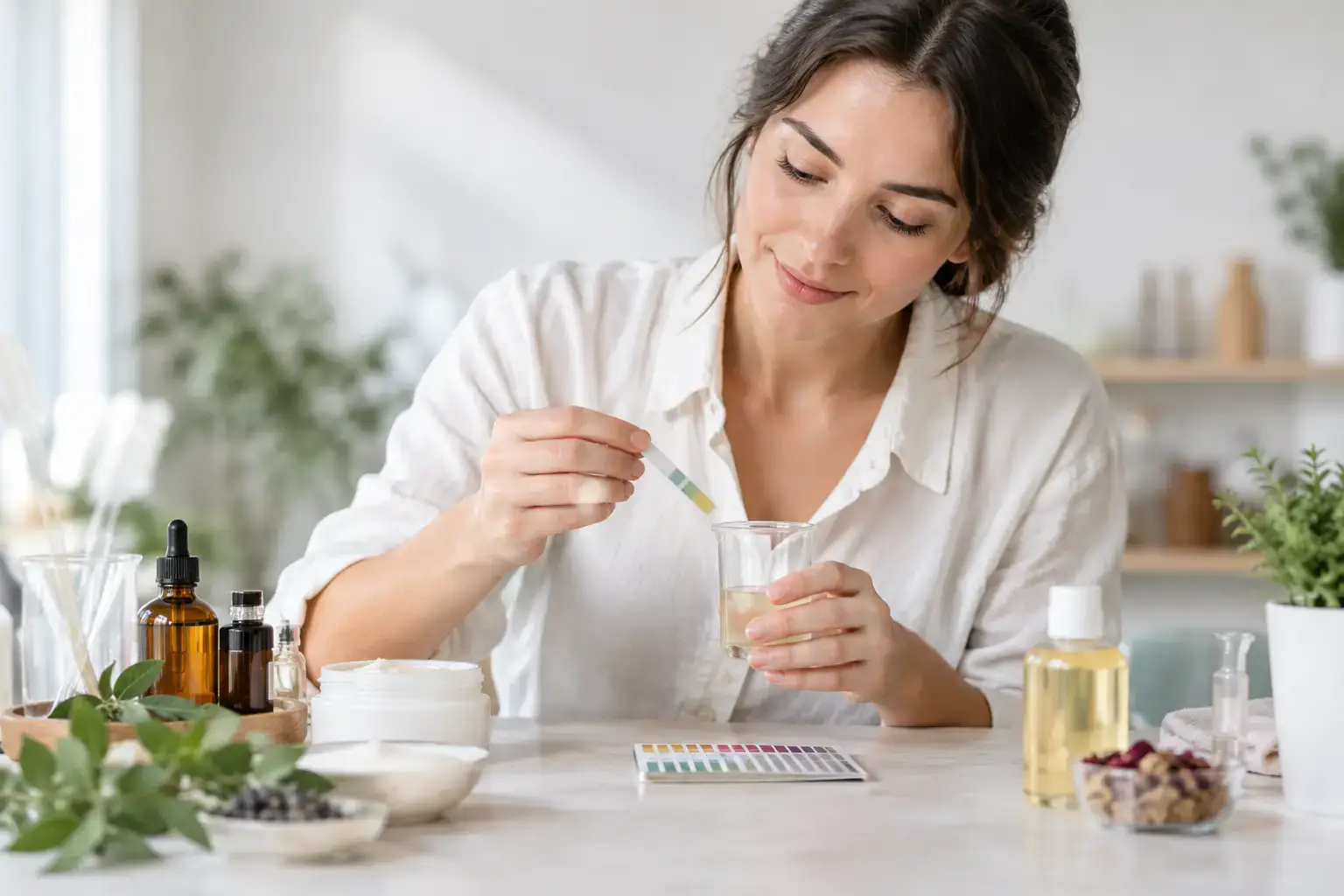
A lotion can look silky, smell wonderful, and still miss the mark if its pH is wrong. A formula that is too acidic may sting compromised skin; one that is too alkaline can feel harsh or interfere with how a preservative, active ingredient, or thickener performs. This beginner guide to cosmetic pH gives you a practical way to test, understand, and adjust water-based DIY skincare without turning your worktable into a chemistry lab.
What cosmetic pH actually tells you
pH measures how acidic or alkaline a water-based product is. The scale runs from 0 to 14. A pH below 7 is acidic, 7 is neutral, and above 7 is alkaline. Each whole number represents a tenfold change, so a formula at pH 5 is meaningfully more acidic than one at pH 6.
Human skin is naturally mildly acidic, commonly described as having an acid mantle around pH 4.5 to 5.5. That does not mean every product must land at exactly 5.0. A rinse-off cleanser, a leave-on serum, and a cream containing a particular active may each need a different target. The right pH comes from the formula’s purpose, ingredient requirements, skin feel, and preservation system.
Here is the first rule to remember: pH applies only when water is present. An anhydrous lip balm made with butters, waxes, and oils has no meaningful pH to measure. The same is true for an oil-only facial serum or body oil. Adding a pH strip to oil does not produce a useful result.
Why pH matters in a DIY formula
For a beginner, pH is best understood as a performance checkpoint. It can affect comfort on the skin, viscosity, preservative performance, and the behavior of certain active ingredients.
Many broad-spectrum cosmetic preservatives work only within a stated pH range. If your finished lotion falls outside that range, the preservative may not provide the protection you expected. A preservative is not optional simply because the formula has a skin-friendly pH, and a correct pH does not replace good manufacturing practices, clean equipment, appropriate packaging, or preservation.
Some ingredients are especially pH-sensitive. Niacinamide is generally comfortable in a mildly acidic to near-neutral range, while exfoliating acids need a lower pH to function as intended. Certain gums and thickeners can thin, clump, or change texture when the pH shifts. A formula may also become less stable after an adjustment, which is why testing should be followed by a close look at texture, color, odor, and separation.
A beginner guide to cosmetic pH testing
The most dependable choice for small-batch formulating is a calibrated digital pH meter. High-quality narrow-range pH strips can be useful for a quick check, especially when you are learning, but they are harder to read precisely in colored, cloudy, or thick products. Do not rely on broad pool or garden strips for a leave-on skincare formula.
Before you start, gather your meter or strips, distilled water, small clean cups, disposable pipettes, a notebook, and the ingredients you will use for adjustment. If you are using a meter, you will also need the appropriate calibration buffers and electrode storage solution recommended by the meter manufacturer. Never store a pH probe dry unless its instructions specifically say to do so.
Test the formula after it is fully made, cooled, and well mixed. Heat can affect a reading, and an emulsion often changes as it cools and settles. For a thin toner or gel, test a representative sample directly if your meter is designed for it. For a thick cream or lotion, make a dilution for a more readable measurement: weigh one part product with nine parts distilled water, mix thoroughly, then test that dilution consistently every time.
That dilution does not create the exact in-package pH of a cream. It gives you a repeatable method for comparing batches and deciding whether you need to make a cautious adjustment. Record the formula name, batch date, temperature, test method, result, and every change you make. Your notes are what turn a fun first batch into a formula you can recreate.
Calibrate before you trust the number
A pH meter is only as useful as its calibration. Calibrate it according to the instructions before a testing session, commonly with pH 4 and pH 7 buffer solutions for skincare work. Rinse the probe with distilled water between samples and gently blot it dry rather than rubbing it.
If a reading jumps around, give the sample time to settle. Thick products, air bubbles, a dirty electrode, and a meter that needs calibration can all create confusing results. When in doubt, clean and recalibrate the meter, then test again with a fresh sample.
Choosing a sensible pH target
There is no universal “best pH” for cosmetics. For many everyday leave-on lotions, creams, and hydrating serums, a target in the mildly acidic range, often around pH 4.5 to 5.5, is a practical starting point. A gentle cleanser may be formulated around pH 5 to 6, while the proper range for an acid treatment depends on the specific acid, concentration, and intended use.
Start with your preservative supplier’s approved range, then check the usage guidance for every pH-dependent active, extract, surfactant, and thickener in the formula. Choose a target that satisfies all of those requirements. If they conflict, do not guess your way through it. Reformulate, select compatible ingredients, or use a proven formula designed for that ingredient combination.
Be cautious with strong acid treatments and high-level exfoliating actives. Their effective pH, free-acid content, irritation potential, and safety testing involve more than a single meter reading. Beginners can make excellent moisturizers, cleansers, and simple serums while building the knowledge needed for more advanced acid systems.
How to adjust pH without overshooting
You adjust pH in tiny increments, not by pouring an acid or base directly into the main batch. Prepare a dilute adjusting solution first. Citric acid or lactic acid is commonly used to lower pH. Sodium hydroxide solution is commonly used to raise pH, though it must be handled with serious care because sodium hydroxide is caustic.
Wear gloves and eye protection when working with acids or bases. Always add sodium hydroxide to water slowly, never water to sodium hydroxide, because the mixture can heat quickly. For many beginner formulas, a pre-made, properly diluted pH-adjusting solution is easier to manage than working with dry sodium hydroxide.
Pull a small sample of your finished batch into a separate cup. Add one drop of your dilute adjustment solution, mix completely, and test again. Once you know the direction and approximate amount needed, scale that adjustment carefully to the full batch. Add it slowly, mix thoroughly, wait a few minutes, and retest.
Do not chase a perfect number to two decimal places when your formula and measuring tools do not support that level of precision. A stable reading within your formula’s acceptable range matters more than forcing pH 5.02 when pH 5.1 is fully suitable.
What to check after adjustment
Changing pH can change more than the number on the screen. Let the product sit, then inspect it again after 24 to 48 hours. Look for thinning, thickening, graininess, separation, color changes, new odor, or air bubbles. Check the pH again after the formula has rested.
For products you plan to sell, repeat this process across multiple batches and use appropriate stability and microbial testing. A home pH test is a valuable formulation tool, but it cannot confirm long-term safety or preservative efficacy. If you are creating products for others, professional challenge testing and stability testing are part of responsible product development.
Common pH mistakes new makers can avoid
The most common mistake is testing an oil-only product. The next is measuring a hot emulsion, adjusting too quickly, or changing pH before checking the requirements of the preservative. Another frequent issue is adding lemon juice, vinegar, baking soda, or other kitchen ingredients as a shortcut. These materials are not controlled cosmetic pH adjusters, can vary from batch to batch, and may introduce instability or preservation concerns.
It is also easy to assume that a natural ingredient automatically fits every formula. Many naturally derived ingredients are excellent choices, but compatibility still matters. A beautiful botanical extract, gentle surfactant, or biodegradable thickener has its own recommended conditions. Professional-looking results come from letting every ingredient do the job it was selected to do.
pH is one of the quiet details that helps your handmade formula feel intentional. Measure carefully, make one small adjustment at a time, and keep clear notes. Soon, checking pH will feel as natural as weighing your oils, stirring your emulsion, and enjoying a product that is truly your own.