
Essential Oil Dilution for Skin Made Simple

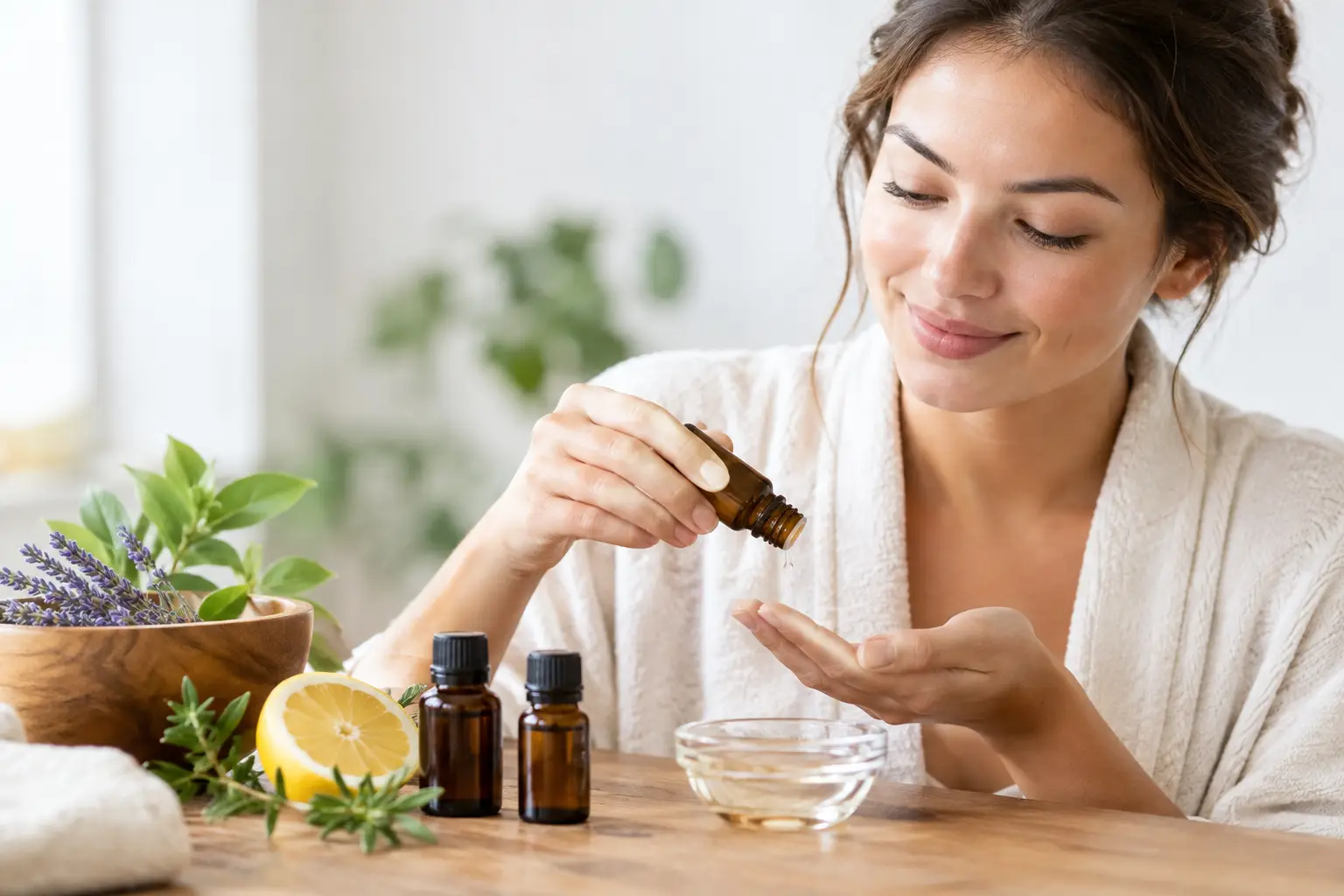
A beautiful bottle of essential oil is not a finished skin-care product. It is a concentrated aromatic material, and the amount that smells lovely in a diffuser can be far too strong for a leave-on facial oil, body butter, or lotion. Essential oil dilution for skin is the small formulation step that protects both your customer experience and your formula’s performance.
For DIY makers, dilution is also where personalization becomes practical. You can create a subtly scented balm for dry hands, a fresh body oil, or a custom lotion without guessing, overloading the batch, or relying on a random number of drops. Start with a percentage, choose a skin-appropriate essential oil, and let the batch size tell you exactly how much to use.
Why essential oil dilution for skin matters
Essential oils contain naturally occurring aromatic compounds that can irritate, sensitize, or trigger an unwanted reaction when used too generously. “Natural” describes an ingredient’s origin, not its ideal usage rate. A well-made natural formula still needs thoughtful limits.
Dilution affects more than safety. Too much essential oil can overpower the scent, compete with the texture of a carefully built emulsion, and make a product unpleasant to use every day. A lower level often gives a more polished result, especially in facial products where the aroma sits close to the nose.
The right percentage depends on the essential oil, the product type, the area of application, and the person using it. A rinse-off scrub and a leave-on facial serum do not call for the same approach. Neither does a body product intended for healthy adult skin versus a formula for a child, someone who is pregnant, or someone with reactive skin.
Start with percentages, not drops
Professional formulators calculate essential oils as a percentage of the total finished batch. This method scales cleanly whether you are making a 30-gram test jar or a 3-kilogram production batch.
A 1% dilution means essential oil makes up 1% of the total formula weight. In a 30-gram batch, that is 0.30 grams of essential oil and 29.70 grams of your carrier oil, balm base, or complete formula. At 2%, the same batch contains 0.60 grams of essential oil and 29.40 grams of everything else.
Use a scale that reads to 0.01 gram for small batches. It is one of the simplest tools for moving from casual crafting to repeatable formulation. It also lets you document your formula accurately, adjust it later, and make the same product again.
Drops can be useful when you are making a very small personal project, but they are an estimate, not a formulation method. Drop size changes with the bottle reducer, viscosity, temperature, and oil itself. A commonly used estimate is 20 drops per milliliter, so 1% in roughly 1 ounce or 30 mL of carrier oil is about 6 drops, while 2% is about 12 drops. Treat that as a quick home reference, not a substitute for weighing ingredients.
Practical starting ranges for leave-on products
For many adult leave-on products, these conservative starting points are useful:
- 0.25% to 0.5% for facial oils, eye-area-adjacent products, very sensitive skin, and subtle aroma.
- 0.5% to 1% for everyday facial creams, hand products, and gentle body care.
- 1% to 2% for most adult body oils, lotions, balms, and massage products.
- Up to 3% only when the individual essential oils, intended use, and applicable dermal limits support it.
These are starting ranges, not universal permissions. Some essential oils have much lower recommended maximums, while others may be appropriate at a higher level in certain product types. Always use the lowest effective amount and check the supplier’s current safety information for each oil in your blend.
Choose the carrier to match the product
A carrier is the part of the formula that disperses the essential oil across the skin. In an anhydrous product, this may be a lightweight emollient oil, a richer botanical oil, a butter, or a balm base. For example, jojoba oil can create a dry-touch facial oil, while sunflower oil and shea butter can support a more cushiony hand balm.
In a lotion or cream, essential oil is only one small part of the oil phase. Build the emulsion first with a suitable emulsifier and stable oil phase, then include your essential oil at its calculated percentage. CEB-N is an emulsifier, not a true wax, so use it as part of a complete emulsion design rather than expecting it to provide the structure of a wax-heavy balm.
For emulsions, add volatile aromatic ingredients during cool-down, once the batch is at the temperature recommended for your formula and below roughly 104°F. This helps preserve the aroma and avoids unnecessary heat exposure. A preserved water-containing lotion still needs a properly selected preservative. Essential oils do not preserve creams, mists, cleansers, or any other water-based product.
Watch for essential oils that need extra care
The name on the bottle is not enough information. Essential oils vary dramatically in their skin limits, even within the same botanical family. Cinnamon bark, clove bud, oregano, thyme, and certain mint oils are often too intense for a casual skin-care blend and deserve particular caution. If you are new to formulation, use gentler, well-documented choices at low levels rather than trying to make a strong blend work.
Citrus oils require another layer of attention. Some expressed citrus oils, including certain lemon, lime, bergamot, and grapefruit oils, can be phototoxic. That means sun or UV exposure after application may lead to a skin reaction or discoloration. Steam-distilled or FCF versions may have different limits, but the exact material matters. Read the product documentation, label the finished product clearly, and do not assume every citrus oil behaves the same way.
Avoid applying essential-oil products to broken, freshly shaved, sunburned, or irritated skin. Keep them away from eyes, lips unless the formula is specifically designed for lip use, and mucous membranes. For babies and young children, seek guidance specific to the age group and oil involved. “Gentle” is not a label you can assign based on scent alone.
A simple way to calculate your batch
Once you have chosen your use level, the calculation is straightforward:
Total batch weight × essential oil percentage = essential oil weight
For a 100-gram body oil at 1%, multiply 100 by 0.01. Your essential oil amount is 1 gram. The carrier oils total 99 grams.
For a 50-gram hand balm at 0.5%, multiply 50 by 0.005. Your essential oil amount is 0.25 gram. Subtract that 0.25 gram from the oils, butters, and waxes already planned in the balm so the total remains 50 grams.
When combining several essential oils, their combined amount must remain within your total fragrance or essential-oil allowance. A blend of lavender, cedarwood, and sweet orange at 1% is still 1% total, not 1% of each oil. Then check the recommended limit for every ingredient in the blend, especially if one component has a restrictive dermal maximum.
Patch test the finished formula
A patch test cannot guarantee that nobody will react, but it is a sensible final check for a new leave-on product. Apply a small amount of the finished, diluted formula to a limited area of intact skin, such as the inner forearm. Leave it on as directed for normal use and watch for redness, itching, burning, swelling, or discomfort over the next 24 to 48 hours.
Stop using the product if irritation occurs. Do not try to “push through” a reaction, and do not apply undiluted essential oil to counter it. Wash the area gently with soap and water and seek medical advice when symptoms are severe, persistent, or involve the eyes, breathing, or significant swelling.
Label like a thoughtful maker
If you give away or sell a finished product, your label should help the next person use it wisely. List the product name, net weight, full ingredient list using appropriate ingredient naming, and clear directions. For formulas containing photosensitive citrus materials, include the relevant sun-exposure warning. Add a sensible storage note, since heat and direct light can fade a scent and shorten the life of delicate oils.
Keep your formula record with the batch date, ingredient lot numbers, percentages, process notes, and observations after a few weeks. This is how a favorite test batch becomes a dependable product you can remake with confidence.
A restrained essential-oil blend can make your skin care feel distinctly yours without asking your skin to tolerate more than it should. Measure carefully, make a small test batch, and let good formulation turn a creative idea into something you will be happy to use again and again.