
Small Batch Manufacturing Guide for Skincare

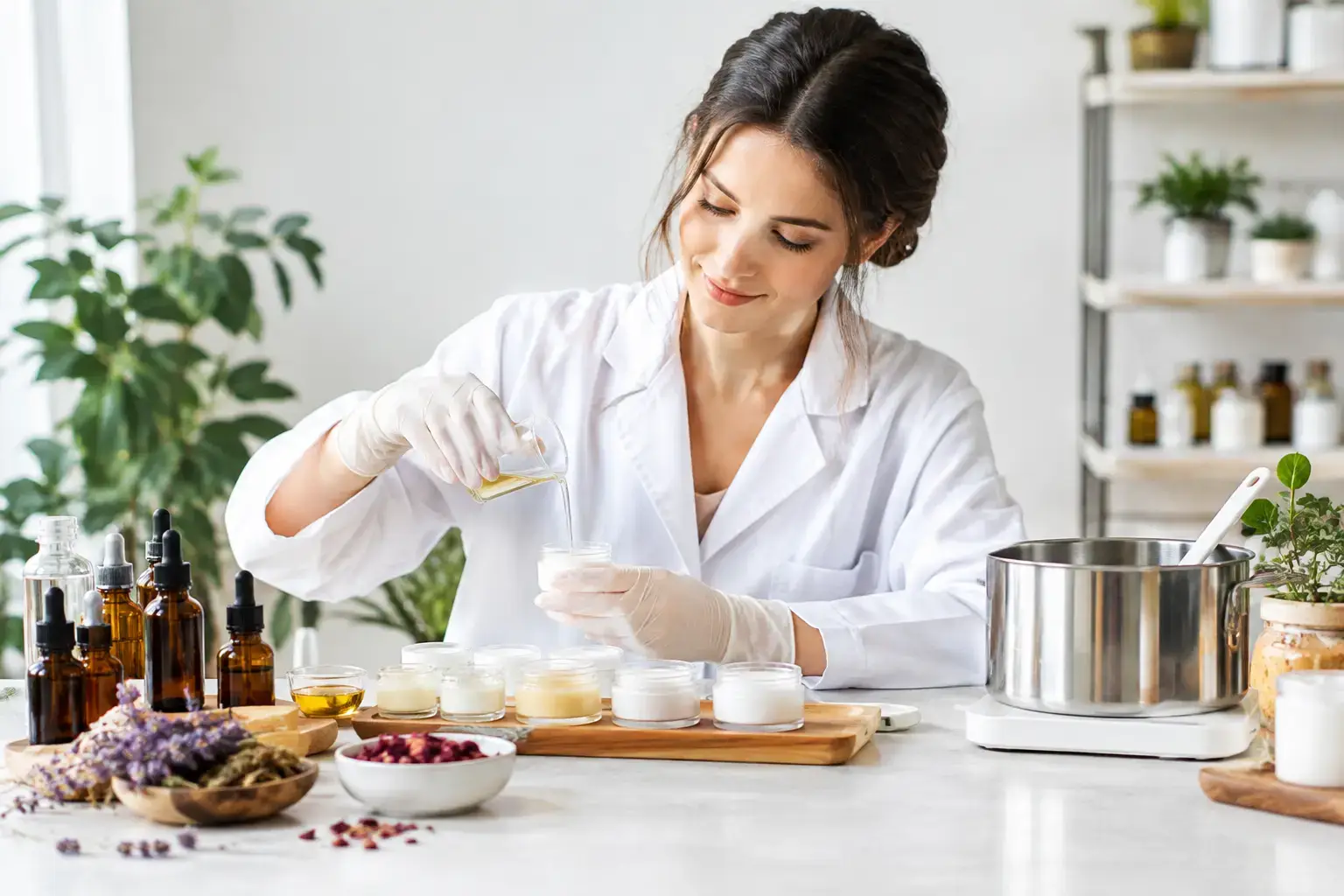
A beautiful first batch can be exciting. A beautiful tenth batch that looks, feels, smells, and performs exactly like the first is a manufacturing process. This small batch manufacturing guide is for makers who are ready to move beyond casual mixing and create personal-care products with repeatable quality.
Small production does not mean lower standards. Whether you are making a few jars of body butter for a market, filling facial serum bottles for your growing shop, or preparing a supervised skincare activity, your process should protect the formula, the person using it, and the reputation you are building.
Start With a Product Brief, Not a Shopping Cart
Before selecting oils, extracts, or fragrance, write down what the finished product needs to do. A clear product brief keeps a formula from becoming an expensive collection of interesting ingredients.
For a lightweight daily lotion, decide the target skin feel, whether it should be fragrance-free, the type of package, and the user it serves. A rich hand cream needs different emollients, viscosity, and packaging than a facial gel serum. For a scrub, decide whether it is an anhydrous oil-and-butter product or one that will regularly meet water in the shower. That distinction affects preservation and use instructions.
Keep your first production goal narrow. Choose one product type, one package size, and one formula version. Customization is part of the fun, but changing the oil blend, fragrance, active ingredient level, and package all at once makes it difficult to know what caused a problem.
Build a Formula That Can Be Repeated
Professional-looking batches begin with formulas written in percentages, not teaspoons or drops. Percentages allow you to make 100 grams for evaluation, 500 grams for a small release, or a larger batch later without rewriting the formula.
A basic water-based emulsion generally contains a water phase, an oil phase, an emulsifier, a preservative system, and any cool-down ingredients such as heat-sensitive extracts, fragrance, or certain active ingredients. Each ingredient needs a job. Oils add slip and richness. Humectants support hydration. Thickeners build body. Antioxidants can help protect oils from oxidation, but they are not a substitute for a broad-spectrum preservative in a water-containing product.
Choose the emulsifier for the formula, not the label
An emulsifier is the bridge between oil and water. It determines whether a lotion stays together, how it spreads, and often how it feels on the skin. CEB-N is a reliable emulsifier for makers who want elegant emulsions, but it is not a true wax. Treating it like a wax or using it only to make a formula thicker can lead to instability.
Your oil phase, emulsifier level, processing temperature, and mixing method all work together. Use an HLB table and tested formulation guidance when you are building an emulsion from scratch. A ready-to-use emulsion base can also be a smart starting point when speed and consistency matter more than developing every part of the base yourself.
Respect the preservation plan
If a product contains water, hydrosols, aloe juice, or water-based extracts, it needs a preservation strategy designed for the full formula. Preservative choice depends on pH, ingredient compatibility, product type, and the way customers will use the product. A lotion in a pump bottle faces different contamination exposure than a cream repeatedly touched with wet fingers.
Measure pH with an appropriate meter or reliable strips, then record the result. Check whether your preservative works at that pH range. Do not assume that essential oils, vitamin E, refrigeration, or clean-looking equipment will preserve a water-based product. They do not replace a properly selected preservative system.
Set Up a Small-Batch Production Space
You do not need a factory to work carefully, but you do need a dedicated, organized workspace. Clean and sanitize your work surfaces, tools, containers, and packaging according to the directions for your chosen cleaning and sanitizing products. Allow items to dry properly before use.
Separate raw materials from finished goods. Label every container with the ingredient name, date received, supplier lot when available, and any expiration or recommended-use date. Keep oils, butters, extracts, and fragrances away from excess heat and direct light. Good storage protects performance before production even starts.
For most small batches, a precise scale, heat-safe beakers, spatulas, thermometer, mixing tools, pH testing supplies, and clean filling equipment are more useful than a crowded shelf of gadgets. Accuracy matters most with preservatives, active ingredients, fragrance, and small percentages of thickeners or chelators.
Follow the Same Production Order Every Time
A written batch record is one of the simplest tools for scaling with confidence. It records what you intended to make, what you actually made, and what happened during the process. If a batch separates three weeks later, your notes give you somewhere useful to look.
For an emulsion, a dependable workflow looks like this:
- Weigh each ingredient by phase and verify the numbers before heating.
- Heat the water and oil phases as required by the formula, using gentle, even heat.
- Combine phases at the recommended temperature and mix using the same method and time for each batch.
- Cool while stirring as needed, then add cool-down ingredients at their appropriate temperature.
- Check and adjust pH only when the formula calls for it, then fill clean packaging and label the batch.
Record temperatures, mixing time, pH, total batch weight, fill count, and observations such as viscosity, color, and fragrance strength. Write down substitutions too. A switch from one botanical extract, oil, or fragrance can change color, odor, thickness, or stability.
Test Before You Sell or Share
A product that looks smooth on fill day still needs time. Reserve samples from every batch and monitor them in the package customers will receive. Check for separation, odor changes, color shifts, graininess, thinning, thickening, or changes in pH.
A simple stability screen may include samples kept at room temperature, in a warmer location, and in a cooler location. Freeze-thaw cycling can reveal stress in some emulsions, but it does not replace real-time observation. Take notes weekly, with photos when helpful.
For products intended for sale, preservation effectiveness and microbial testing deserve serious attention. Challenge testing through an appropriate lab is the best way to evaluate whether a preservation system controls microbial growth in the actual formula. A stable-looking lotion is not automatically a microbiologically safe lotion.
Packaging is part of testing, too. A formula can react with a cap liner, discolor a clear bottle, leak from a pump, or become too difficult to dispense as it thickens. Fill a few samples, use them normally, and see what the customer experience is really like.
Scale Carefully, Not All at Once
Going from a 100-gram test batch to a 5-kilogram production batch is not just multiplication. Larger volumes heat and cool differently, mixing tools create different shear, and powders may disperse differently. Scale in sensible steps, such as 100 grams to 500 grams to 1 kilogram, while preserving the same documented process as closely as possible.
Before increasing volume, confirm that you can source each ingredient consistently and that your packaging, labels, and storage space are ready. Use one approved formula version at a time. If you improve it, assign a new version number and retest it rather than quietly changing the recipe mid-production.
Label Honestly and Keep Claims Grounded
A polished label should identify the product, list ingredients using the appropriate cosmetic naming conventions, provide net contents, and include business information and practical use directions. Add warnings when relevant, especially for products with essential oils, exfoliants, or ingredients that require special care.
Be thoughtful with product claims. Saying a lotion moisturizes dry-feeling skin is different from claiming it treats eczema. Cosmetic claims should describe appearance, cleansing, conditioning, or the feel of skin and hair, not diagnose, treat, or cure a medical condition. When in doubt, simplify the claim and focus on the real sensory and cosmetic benefits of your formula.
Small-batch manufacturing is where creativity meets discipline. Start stirring, keep careful records, and let each well-tested batch teach you something useful. The product becomes personal because you made it, but customer confidence comes from making it the same careful way every time.