
Homemade Body Butter Recipe That Stays Whipped

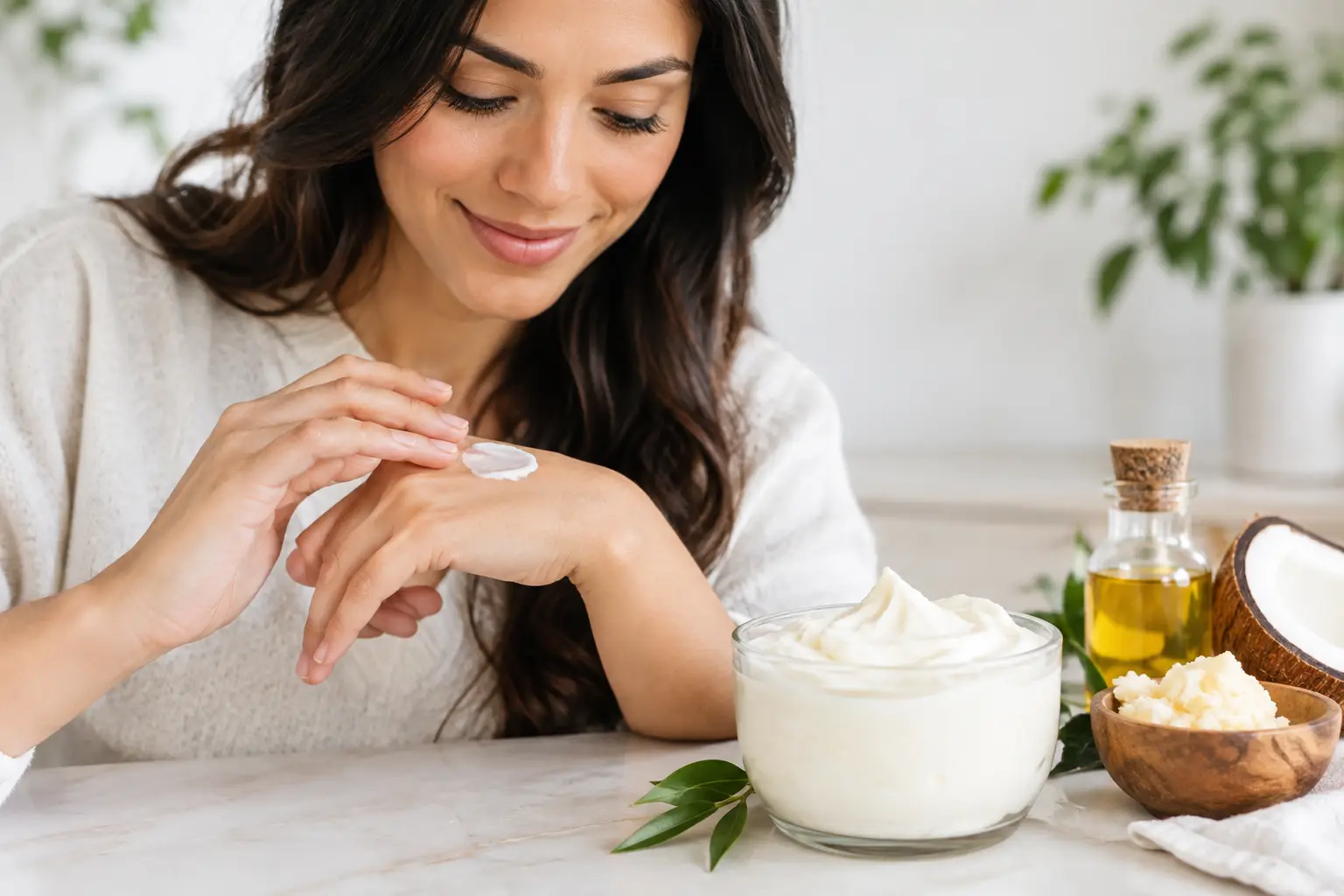
A good homemade body butter recipe should feel like a treat, not a science experiment that melts into oil on the bathroom counter. The difference comes down to balance: firm butters provide structure, liquid oils give slip, and careful cooling creates that soft, cloudlike whipped texture.
This is an anhydrous formula, meaning it contains no water. That makes it an approachable first project for new makers, while still giving experienced formulators plenty of room to customize the feel, scent, and skin-loving oils.
Why this homemade body butter recipe works
Body butter is not a lotion. Lotions combine water and oil with an emulsifier, then require a broad-spectrum preservative for safety. Body butter is made from oils, butters, and optional oil-soluble ingredients only. Its rich texture comes from the natural solid fats in ingredients such as shea butter and mango butter.
For a whipped finish, the formula needs both structure and glide. Shea butter brings cushion and a familiar creamy feel. Mango butter adds a drier, more elegant finish and helps the butter hold its shape. A lightweight liquid oil keeps the finished product from feeling overly hard or waxy, while arrowroot powder can reduce the oily after-feel.
The trade-off is simple: a butter that stays firm in a warm home will usually feel denser on the skin. A softer, silkier blend may lose its whipped look during summer shipping or in a hot bathroom. Make a small test batch first, then adjust for your climate and preference.
Whipped body butter formula
This formula makes 200 grams, enough to fill several small jars. Using a digital scale is far more reliable than measuring by spoons or cups, especially when you decide to resize the batch.
| Ingredient | Percentage | Weight for 200 g | | — | —: | —: | | Refined or unrefined shea butter | 48% | 96 g | | Mango butter | 25% | 50 g | | Lightweight liquid oil, such as sunflower, sweet almond, or jojoba | 18% | 36 g | | Arrowroot powder | 8% | 16 g | | Vitamin E | 1% | 2 g |
Vitamin E is an antioxidant that can help slow oxidation in oils. It is not a preservative and does not make a water-containing formula safe. Keep this recipe completely free of water.
If you would like to add a skin-safe fragrance or essential oil, use it at the supplier’s recommended and IFRA-compliant rate. For a simple 1% addition, use 2 g fragrance and reduce the shea butter from 96 g to 94 g. Some essential oils have very low safe leave-on limits, so never assume that a favorite diffuser blend is suitable for body products.
Equipment to gather first
Set out a heat-safe glass measuring cup or beaker, a saucepan for a double boiler, a digital scale, silicone spatula, fine sieve, hand mixer, and clean jars with lids. A stand mixer can work for larger batches, but a hand mixer gives better control for this size.
Your tools and containers should be clean and thoroughly dry. Water droplets, wet hands, and damp utensils are the biggest avoidable problems in an anhydrous body butter.
How to make whipped body butter
- Weigh the butters and oil. Add the shea butter, mango butter, and liquid oil to your heat-safe container. Save the arrowroot powder and vitamin E for later.
- Melt gently. Place the container over a saucepan of barely simmering water. Stir occasionally until the ingredients are fully melted and clear. Avoid high heat and do not let water splash into the blend.
- Cool with intention. Remove the melted oils from heat and let them cool for about 15 to 20 minutes. Stir in the vitamin E and fragrance, if using. Then place the container in the refrigerator or freezer for short intervals, checking every 10 to 15 minutes.
- Wait for the right texture. The mixture should look opaque around the edges and feel like soft pudding or partially set frosting. If it is still fully liquid, it will not whip. If it becomes rock-hard, let it sit at room temperature for a few minutes before mixing.
- Sift in the arrowroot. Sift the arrowroot powder over the cooled mixture to prevent clumps. Mix slowly at first, scraping the sides and bottom of the container.
- Whip until fluffy. Increase the mixer speed and whip for several minutes, stopping once or twice to scrape down the bowl. The body butter should become pale, airy, and able to hold a soft peak.
- Fill and set. Spoon or pipe the butter into dry jars. Let the jars sit uncovered for an hour or two before capping so any warmth can escape. Store away from direct sunlight and heat.
Congratulations, it is done and it is yours.
The cooling step prevents grainy body butter
If your body butter turns grainy a few days after making it, the issue is usually crystallization, not bad ingredients. Natural butters contain different fatty acids that can cool and set at different speeds. When they cool slowly or melt repeatedly in a warm room, larger crystals can form and create a gritty feel.
A controlled melt and quicker, even cool-down helps. Melt the butters fully rather than partially, then cool the entire batch until it reaches that soft, semi-solid stage before whipping. Once finished, do not leave jars in a hot car or sunny windowsill. If graininess does appear, remelt the batch completely and repeat the cooling process.
Customize the feel for your skin and climate
The formula above is a dependable starting point, not a rule carved in stone. Personalization is where handmade skincare becomes especially useful.
For a richer winter body butter, replace part of the liquid oil with more shea butter. Start with a 5% change, not a dramatic overhaul. For a lighter finish, choose fast-absorbing oils such as sunflower or grapeseed and consider lowering arrowroot to 5% if you dislike a powdery after-feel.
Jojoba oil gives a more silky, dry-touch profile, while sweet almond oil creates a more classic emollient slip. Fractionated coconut oil is very lightweight and stays liquid, but it may make the formula too soft in a warm climate unless you increase a solid butter. Cocoa butter adds firmness and a lovely natural aroma, though it can make the final product harder to whip.
You can also use botanical oil infusions or oil-soluble extracts, provided they are designed for leave-on cosmetic use and fit within the formula’s oil phase. Keep new additions small and replace an equal weight of liquid oil so the total always remains at 100%.
Safe handling and storage matter
Because this body butter has no water, a broad-spectrum preservative is generally not part of the formula. That changes if you add water-based ingredients such as aloe juice, hydrosols, or water-soluble extracts. At that point, you are creating an emulsion rather than a simple body butter, and you need an appropriate emulsifier, preservative, and stability testing plan.
For this recipe, use a clean scoop or dry fingers rather than dipping in after a shower. Make smaller jars if you are gifting the product or testing several scents. If the butter develops an unusual odor, visible contamination, or has been repeatedly exposed to water, discard it.
Patch test any new fragrance, essential oil, or botanical ingredient on a small area of skin. Natural ingredients can still cause sensitivity, especially for children, people with allergies, and anyone with compromised skin.
A jar of whipped body butter is also a useful lesson in formulation: one small change in butter, oil, powder, or temperature can change the whole experience. Keep notes on each batch, make adjustments in small percentages, and soon you will have a signature blend that feels exactly right in your hands and on your skin.