
What a Cosmetic Formulation Course Should Teach

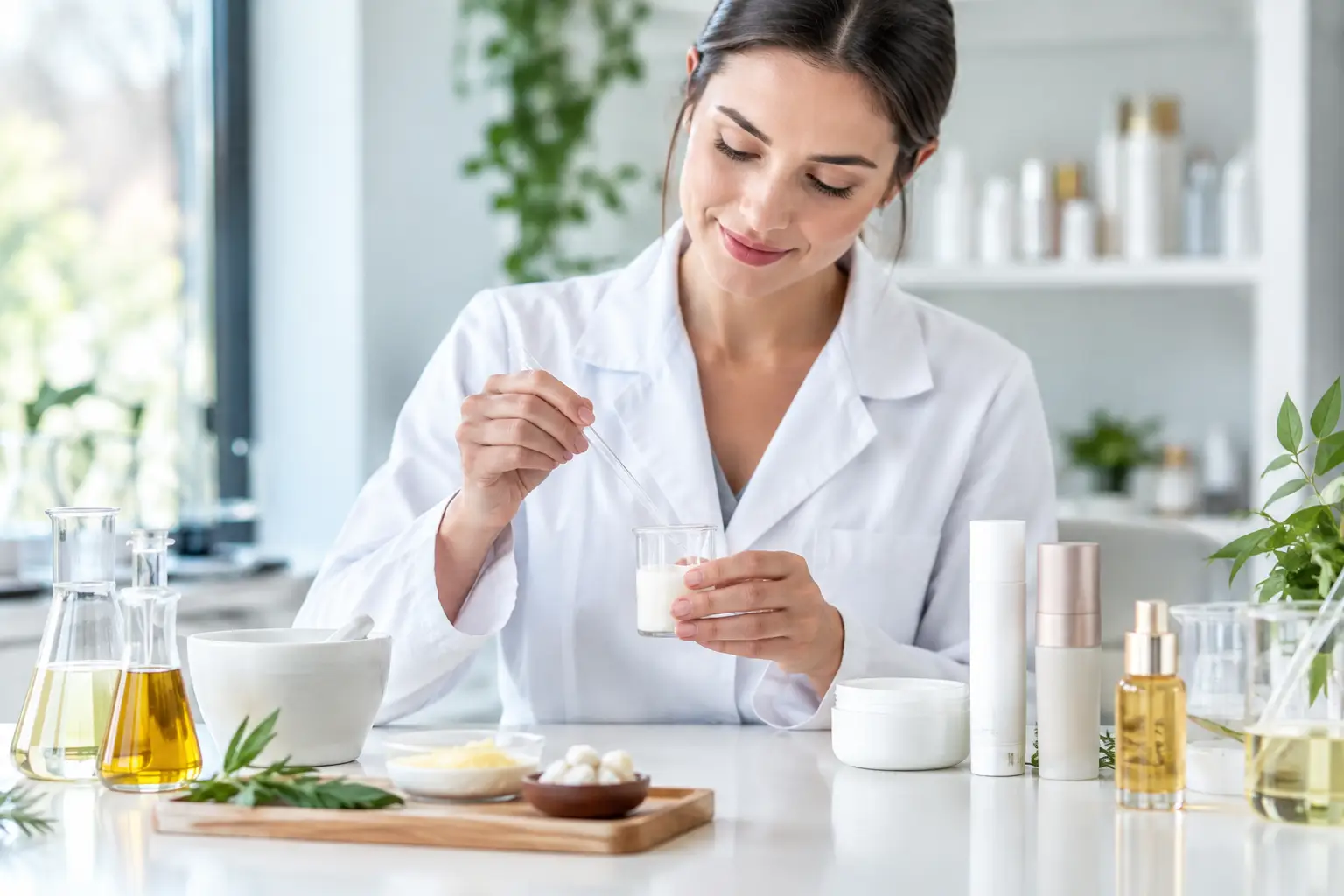
A lotion that separates after two days teaches a tougher lesson than any ingredient description. A cosmetic formulation course should help you understand why it happened, how to prevent it, and which changes are worth testing before you make another batch. For DIY makers and growing beauty businesses, that knowledge turns a fun project into a repeatable, reliable product.
The right course does more than hand you recipes. It teaches you how water, oils, emulsifiers, thickeners, active ingredients, fragrance, and preservatives work together. That is what gives you the confidence to create a lightweight facial lotion, a rich body cream, or a custom serum that feels intentional rather than accidental.
Start With Formula Thinking, Not Just Recipes
Recipes are useful, especially when you are learning to weigh ingredients, follow a heating process, and practice good manufacturing habits. But a formula is more than a list of materials. It is a system in which every ingredient has a job.
A strong course explains formulas in percentages, not only teaspoons or tablespoons. Percentages make it possible to scale a 100-gram test batch into a larger production batch without changing the balance of the product. They also make troubleshooting much clearer. If a cream feels too greasy, you can review the oil phase percentage and the choice of emollients. If it feels thin, you can assess the thickener, emulsifier system, and processing method.
You should learn to read a basic formula in phases. The water phase may contain distilled water, humectants, and water-soluble extracts. The oil phase may include botanical oils, butters, waxes, oil-soluble antioxidants, and an emulsifier. A cool-down phase often holds heat-sensitive active ingredients, fragrance or essential oil, and preservative. Seeing the formula this way helps you understand when each ingredient belongs in the process.
What a Cosmetic Formulation Course Should Cover
A practical curriculum should move from simple anhydrous products to preserved emulsions. Balms and body oils are useful early projects because they let you practice weighing, melting, cooling, and adjusting texture without introducing water. Once water enters the formula, preservation and stability become essential parts of the work.
Emulsification and Texture
A course should explain the difference between an emulsifier and a wax. An emulsifier helps oil and water stay combined. Wax may add structure, firmness, or a protective feel, but it does not automatically create a stable emulsion. CEB-N, for example, is an emulsifier rather than a true wax, and it is designed to help makers create stable, elegant emulsions when it is used at an appropriate level and processed correctly.
You should also learn why the same oil phase can produce very different results. A fast-absorbing emollient can make a lotion feel lighter, while richer oils and butters can create more cushion and occlusion. A fatty alcohol or a gum may increase body, improve slip, or reduce the appearance of thinness. There is no universal “best” texture. The right choice depends on the product, the intended skin feel, the packaging, and the user.
HLB concepts are useful here, particularly as you begin selecting emulsifier systems for different oils. You do not need to memorize every value on day one. You do need to understand that oil-phase choices and emulsifier choices are connected, and that an HLB table can guide experimentation.
Preservation Is a Product Requirement
If a formula contains water, hydrosols, aloe-based liquids, or water-based extracts, it needs an effective broad-spectrum preservative used within its recommended range. This is not optional because a product looks clean, smells fresh, or includes essential oils. Natural-looking ingredients can still support microbial growth when water is present.
A useful course teaches preservation as part of the formula from the start. It should cover the preservative’s recommended pH range, the correct stage for adding it, compatibility with the rest of the formula, and the importance of clean equipment and sanitized packaging. It should also make a clear distinction between an antioxidant and a preservative. Vitamin E can help slow oxidation in oils, but it is not a broad-spectrum preservative for a water-containing cream.
For products intended for sale, proper microbial testing and stability testing are part of responsible product development. A home maker can learn excellent habits through careful small batches and observation, but no course should suggest that visual inspection alone proves a preserved product is safe.
pH, Active Ingredients, and Performance
Many active ingredients work best within a specific pH range. The pH can affect preservative performance, skin feel, viscosity, and ingredient stability, so a course should teach how to measure it with appropriate tools and adjust it carefully when needed.
This matters when you want to personalize products with ingredients such as panthenol, niacinamide, botanical extracts, hyaluronic acid, or selected vitamin ingredients. More is not always better. An active must be compatible with the formula, used at a sensible level, and added in a way that protects its performance. A good lesson explains the trade-offs rather than promising that every popular ingredient belongs in every product.
Learn the Process That Supports Stable Results
Formulation skill is built at the workbench. Look for training that demonstrates the actual process, including setup, heating, mixing, cooling, and packaging. A written formula without process details can leave out the reason a batch fails.
For a typical heated emulsion, you will weigh the water phase and oil phase separately, heat them to the specified temperature, combine them, and mix thoroughly. As the emulsion cools, you continue mixing as directed, then add the cool-down ingredients at the proper temperature. Finally, you check pH if the formula requires it and package the product into clean, suitable containers.
Small details matter. An inaccurate scale can change a preservative level. A weak mixer may not create a fine enough emulsion. Adding a heat-sensitive ingredient too soon can reduce its effectiveness. Filling a jar while the product is too warm can create condensation and affect the finished appearance. These are not reasons to avoid making skincare. They are reasons to work methodically and keep good notes.
Choose a Course That Includes Troubleshooting
The most valuable learning happens when a batch does not go as planned. Look for a cosmetic formulation course that teaches you how to diagnose common issues instead of telling you to start over without explanation.
A separated lotion may point to an emulsifier level that is too low, an incompatible oil phase, insufficient mixing, or a process-temperature issue. A grainy butter balm may need a different cooling method to reduce crystallization. A product that is thinner than expected may need an adjustment to its thickening system, but adding more wax is not always the answer. Extra wax can make a cream draggy, heavy, or less pleasant to spread.
Keep a batch record for every test. Write down the formula percentages, supplier details, lot numbers when available, processing temperatures, mixing time, pH, packaging, and observations over time. Take photos on day one and again after several days or weeks. This practice gives you evidence for your next adjustment instead of relying on memory.
Build Skills in a Sensible Order
New formulators often want to begin with a multi-active face cream in a beautiful airless pump. It is an exciting goal, but simpler projects build better instincts. Start with anhydrous balms, body oils, and scrubs. Move to simple lotions or creams with a dependable emulsifier and preservative system. Then experiment with different emollients, botanical extracts, fragrances, essential oils, and actives one variable at a time.
That progression is useful for small brands, too. Before introducing five products at once, develop one formula that performs well, can be reproduced, and suits its intended package. A body butter in a jar has different texture and heat-stability needs than a lotion in a pump. A facial serum may need a different preservation and viscosity approach than a rinse-off cleanser.
At Suncoast Personal Care Products, Inc Personal Care Products, makers can pair professional-quality ingredients with formulas, calculators, videos, and practical guidance as they build these skills. Whether you choose a ready-to-use emulsion base for a faster custom project or formulate from individual ingredients, the goal is the same: understand what each choice contributes to the finished product.
Make the Learning Personal
The best course leaves room for creativity without skipping the science. You may want a richer cream for dry-feeling skin, a lighter lotion for warm weather, or a fragrance-free product for a simple routine. Start with a stable base formula, then make controlled changes. Swap one emollient, adjust one active, or test one fragrance level at a time.
That is how a formula becomes yours. Not by adding every ingredient you own, but by learning what each ingredient does, testing with care, and making choices you can explain with confidence.